Queue Management System in Saudi Arabia: Faster Service, Happier Customers
Every second a customer waits is a second they reconsider their choice to visit you. Whether it is a telecom outlet in Riyadh or a quick-service restaurant in Jeddah, flow management now defines the customer experience. A smart queue management system in Saudi Arabia gives businesses the tools to control that flow, reduce frustration, and convert waiting time into a calm, branded moment.
This article looks at queuing from a customer-experience angle, then connects it to drive-thru technology, because the two problems, managing people indoors and vehicles outside, are increasingly solved by the same thinking.
The Hidden Cost of a Badly Managed Line
Customers rarely complain about waiting; they simply leave and do not come back. Research into retail behaviour consistently shows that perceived wait time, not actual wait time, drives satisfaction. A visible, orderly system changes perception even before it shortens the clock.
Poorly managed lines also hurt staff. Agents under pressure make mistakes, skip upsells, and burn out faster. A structured queue protects both the customer and the employee by making the pace predictable.
What Customers Actually Want While Waiting
People tolerate waiting far better when three conditions are met: they know their place in line, they know roughly how long it will take, and they feel the process is fair. A good system delivers all three through ticketing, live displays, and transparent first-come logic.
- Certainty: a ticket number and estimated wait remove anxiety.
- Freedom: virtual queuing lets them sit, shop, or step out.
- Fairness: transparent calling order prevents disputes.
How a Queue Management System in Saudi Arabia Builds Loyalty
Beyond speed, modern platforms capture data that marketers dream about. You learn peak hours, average service times per agent, and which services draw the longest lines. That intelligence lets you staff smarter and personalise follow-up messaging.
Many Saudi businesses now let customers join a queue from a QR code or app, receive an SMS as their turn approaches, and rate the visit afterwards. Implementing this well usually means partnering with an experienced integrator like the queue management system in saudi arabia specialists who handle both the software and the on-site hardware.
From Indoor Lines to the Drive-Thru Lane
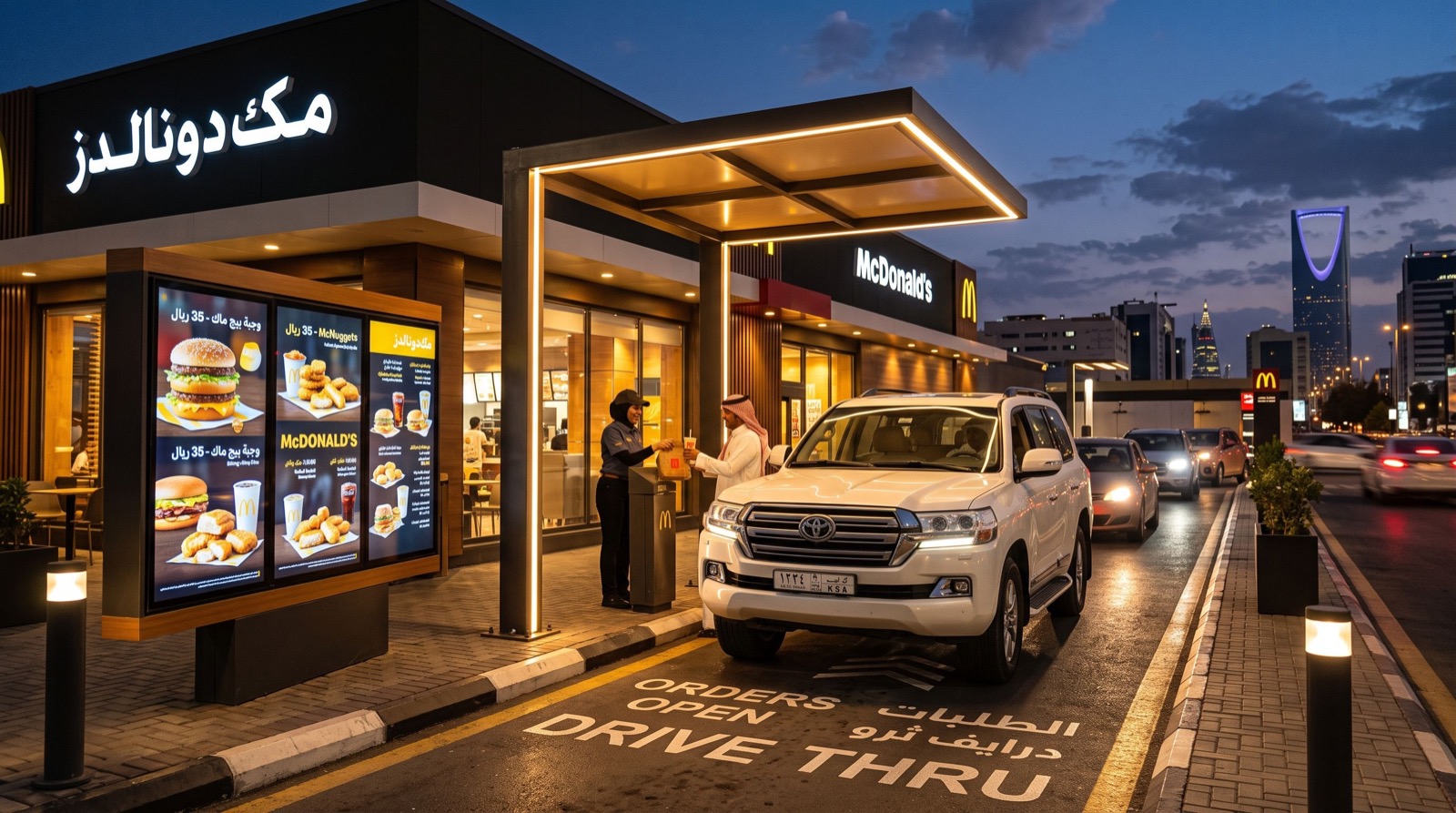
The same flow logic that organises a branch counter also transforms a drive-thru lane. Order-point timers, digital menu boards, and lane-detection sensors keep vehicles moving and staff synchronised. For regional operators, a well-built Drive Thru System in pakistan shows how the same technology scales across markets and cuisines.
Drive-thru performance is measured in seconds per car, and small improvements compound. Shaving ten seconds off each order during a lunch rush can mean dozens of extra customers served without adding a single lane.
Why Combine Queuing and Drive-Thru Thinking?
Both systems chase the same goal: predictable throughput. When a brand standardises on one flow-management philosophy, staff training, reporting, and even hardware suppliers overlap, which lowers total cost and keeps the customer experience consistent across every touchpoint.
Comparing Service Channels
The table below shows how different service channels stack up on the metrics that matter when you design a customer journey in 2026.
| Channel | Typical Wait Driver | Best Tech Fix | Key Metric |
|---|---|---|---|
| Branch counter | Agent availability | Smart ticket routing | Wait time |
| Drive-thru | Order and prep sync | Lane timers + signage | Seconds per car |
| Virtual queue | No-show rate | SMS + app reminders | Show-up rate |
Building Your Rollout Plan
A successful deployment is as much about process as product. Follow a staged plan so staff adapt and data stays clean from day one.
- Map your current customer journey and time each step.
- Set one primary metric, such as average wait or cars per hour.
- Pilot in a single busy location and train staff thoroughly.
- Review analytics weekly and adjust routing rules.
- Scale to other branches once the pilot beats its baseline.
Service-design standards such as those referenced by the Baldrige Performance Excellence Program reinforce the same principle: measure, improve, and repeat. Working alongside reliable local experts on the experience strategy helps turn raw queue data into real retention.
Turning Queue Data Into Marketing Intelligence
The most overlooked benefit of a modern queue platform is the data trail it leaves behind. Every ticket records when a customer arrived, which service they wanted, how long they waited, and whether they completed the visit. Aggregated over months, that becomes a map of demand.
Marketers use this map to time promotions, staff the right counters, and even redesign the service menu. If analytics show that a particular service spikes every Thursday afternoon, you can pre-staff for it and message customers to book ahead, smoothing the rush before it forms.
Post-visit surveys triggered by the system close the loop. A short SMS rating request sent minutes after service captures sentiment while it is fresh, and the response rate far outperforms a generic email campaign sent days later.
Linking Experience to Revenue
When you connect queue data to your CRM, each wait time becomes a variable you can correlate with spend and repeat visits. Branches that keep waits short almost always show higher basket sizes and stronger loyalty, which turns an operations tool into a revenue lever.
An Original Tip for Peak Hours
Use your analytics to create a floating “swing counter” that only opens when the live queue crosses a set threshold. This flexible staffing trick absorbs lunch-rush spikes without paying for idle agents during slow periods, and it is one of the fastest ways to lift satisfaction scores.
Frequently Asked Questions
Will a queue management system work for small businesses?
Yes. Cloud-based plans scale down to a single counter, so a small clinic or telecom shop can enjoy ticketing, SMS alerts, and basic analytics without a large upfront investment.
Can customers join the queue before they arrive?
Absolutely. Virtual queuing through a QR code or app lets customers reserve a spot remotely and receive a notification as their turn nears, which dramatically reduces crowding in the branch.
How does a drive-thru system reduce wait times?
It synchronises the order point, kitchen, and pickup window using timers and sensors, so staff prepare orders in the right sequence and vehicles never stall the lane.
Is staff training difficult?
Most agent consoles are designed for minimal training, and a short pilot period lets your team build confidence before a full rollout across locations.
Conclusion
Flow is the new frontier of customer experience. A thoughtful queue management system in Saudi Arabia, extended from the branch counter to the drive-thru lane, keeps people moving, keeps staff calm, and keeps customers loyal. In 2026, the businesses that win are the ones that treat every second of waiting as a chance to impress. Start with one busy location, measure relentlessly, and scale what works.