Behind every large exhibition, festival, or seasonal campaign is a logistics operation that most attendees never see. Long before the doors open, crates of equipment, promotional stock, catering supplies, and display materials have to be received, sorted, held, and released on a precise schedule. When the event ends, the same goods must be collected, repacked, and either stored again or shipped onward. Get that flow right and an event feels effortless; get it wrong and the cost shows up as delays, damage, and last-minute panic.
Saudi Arabia has become one of the busiest event markets in the region, with a calendar that now runs from major exhibitions and conferences to entertainment seasons and religious gatherings that draw millions. That surge in activity has created a matching surge in demand for flexible, well-timed storage, both for the dry goods that fill exhibition halls and for the perishable supplies that keep hospitality running. This article looks at how storage underpins large events and why seasonal, temperature-aware planning has become essential.
The Hidden Logistics Layer Behind Every Event
An exhibition or festival is, from a logistics point of view, a giant timed choreography. Materials arrive from many suppliers on different dates, often weeks before the event, and cannot simply pile up at the venue. They need a staging point where they can be inventoried, consolidated, and dispatched to the show floor in the right order at the right hour. Storage is the buffer that absorbs the mismatch between when goods arrive and when they are actually needed.
Without that buffer, organisers are forced to accept everything on-site at once, which creates congestion, raises the risk of damage, and turns setup into chaos. A dedicated holding facility transforms a scramble into a sequence.
Why Event Storage Demands Flexibility
Unlike steady retail distribution, event logistics is spiky by nature. Demand for space explodes in the run-up to a show and collapses once it is over. This makes long, rigid warehouse contracts a poor fit and short-term, scalable arrangements far more valuable. Organisers need to expand and contract their footprint in step with the calendar, taking large volumes for a few weeks and releasing them cleanly afterward.
Providers offering purpose-built Storage for Event & Exhibition understand this rhythm and structure their space and staffing around it, giving organisers the surge capacity they need without paying year-round for space they use only seasonally. That flexibility is often the difference between a profitable event and one eaten alive by overheads.
The Perishable Side of Big Gatherings
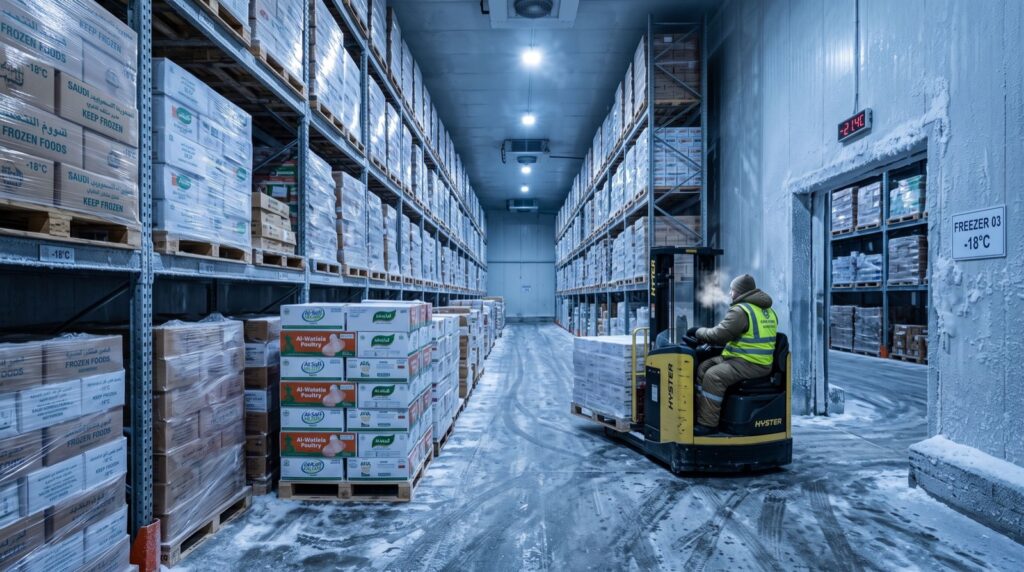
It is easy to think of event storage as crates and banners, but many large gatherings are also enormous catering operations. Festivals, conferences, and seasonal celebrations feed thousands of people, and that food has to be sourced, held, and kept safe until it is served. Fresh and frozen ingredients arriving days ahead of an event need proper cold storage, not a corner of a dry warehouse.
This is where reliable Frozen Storage in Saudi Arabia becomes part of the event plan rather than an afterthought. Caterers and hospitality suppliers who can hold frozen meat, seafood, and prepared items at stable sub-zero temperatures until the day of service protect both food safety and their own margins, avoiding the waste that comes from buying too early with nowhere safe to keep it.
Seasonality: Planning Around the National Calendar
The Kingdom’s event calendar has clear peaks. Entertainment seasons, major exhibitions, national holidays, and religious periods each create concentrated bursts of demand that ripple through the storage market. When several large events overlap, available capacity tightens quickly, and organisers who booked late find themselves paying premiums or scrambling for alternatives.
Smart planning means treating storage as something to secure early, in line with the calendar, rather than a resource to be found at the last minute. The organisers who map their space needs months ahead consistently pay less and face fewer surprises than those who wait until the crates are already on their way.
Coordinating Storage With Transport and Setup
Storage does not exist in isolation; it only works when it is tightly linked to transport schedules and venue access. Goods have to leave the facility in an order that matches the setup plan, arriving at the venue neither too early, where they clog the floor, nor too late, where they hold up construction. That coordination requires clear communication between the storage operator, the transport team, and the event organiser.
Events run most smoothly when this handover is managed by reputable service experts who can synchronise inbound deliveries, holding, and timed dispatch into a single plan. When those pieces move as one, setup crews get exactly what they need when they need it, and the frantic last-minute searches that plague poorly planned events simply do not happen.
Protecting High-Value and Sensitive Items
Exhibitions often involve expensive, fragile, or one-of-a-kind items: display technology, branded installations, product samples, and equipment that would be costly or impossible to replace on short notice. These goods need more than a roof; they need secure, climate-appropriate storage that guards against theft, dust, and heat damage during the days or weeks they wait in the wings.
Building security and environmental control into the storage plan protects the investment that organisers and exhibitors have made in their presence. A damaged centrepiece discovered on setup morning is not just a financial loss but a reputational one, and it is entirely avoidable with the right holding conditions.
Key Takeaways
- Storage is the buffer that absorbs the gap between when event goods arrive and when they are actually needed on-site.
- Event logistics is spiky, so short-term, scalable storage suits it far better than rigid year-round contracts.
- Large gatherings are also major catering operations that need proper frozen and chilled storage, not dry-warehouse corners.
- The national event calendar creates predictable peaks; securing space early avoids premiums and shortages.
- Storage must be tightly coordinated with transport and setup so goods arrive in the right order at the right time.
- High-value and fragile exhibition items need secure, climate-appropriate holding to prevent costly damage.
Making Storage the Backbone of a Successful Event
The most memorable events are the ones where everything simply appears to work, and that seamlessness is almost always built on disciplined storage and logistics planning behind the scenes. By treating holding space as a strategic part of the event, matching dry and frozen capacity to real needs, securing it early against the seasonal calendar, and coordinating it tightly with transport and setup, organisers turn a potential source of chaos into a source of confidence. In a market as busy and fast-growing as the Kingdom’s, that behind-the-scenes discipline is what separates an event that runs on time from one that runs on luck.